
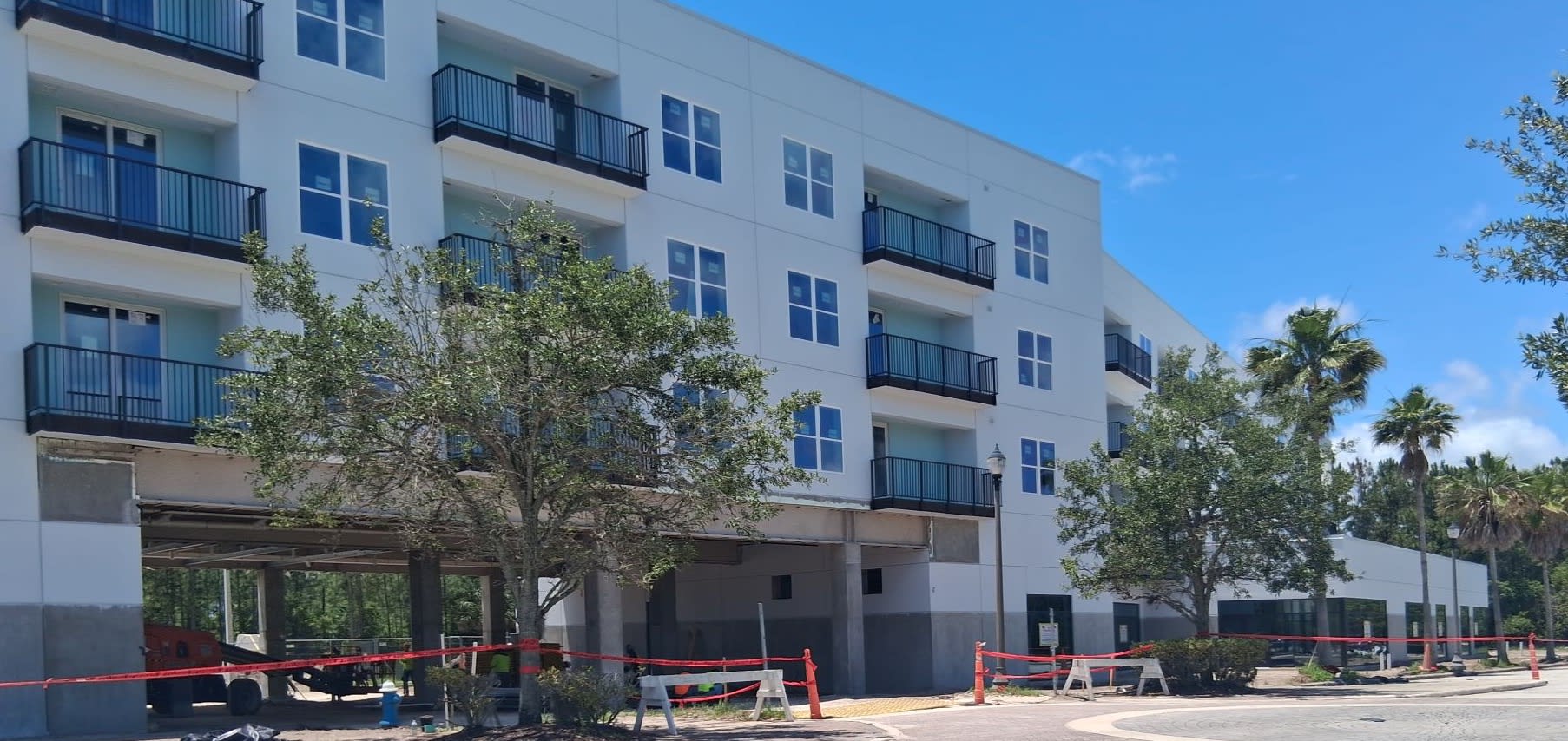
Character vs. Affordability: Inside Palm Coast’s Deepening Housing Debate
What makes a community a home? Is it the precise structural design of its quiet suburban streets, or is it the resilience and availability of the local workforce that keeps it running? Last week, the Palm Coast City Council faced this fundamental question head-on, delivering a definitive decision that will shape our city's growth, neighborhood design, and local housing landscape for decades to come.
During an intense council meeting, a comprehensive 128-page local housing assessment prepared by professional planning consultants JBPro was brought to the table. The objective data painted a stark and undeniable picture of our current market: Palm Coast is experiencing an acute affordability crisis.
According to the study, local working-class households earning under $66,000 annually are now severely cost-burdened. To put that in perspective, federal HUD standards mandate that families shouldn't expend more than $1,655 a month on housing expenses. Today, finding a baseline mortgage or stable rental rate at that threshold inside Palm Coast has become nearly impossible.
The Core Tension: Suburban Identity vs. Diverse Housing Stock
To bridge this growing workforce gap, the planning consultants proposed a series of actionable recommendations aimed at diversifying Palm Coast's current housing profile. The suggestions included updating traditional local zoning codes to accommodate diverse alternatives like duplexes, triplexes, townhomes, smaller lot dimensions, and Accessory Dwelling Units (ADUs or "in-law suites") nestled inside existing neighborhoods.
However, a majority of the City Council explicitly rejected these expansive multi-family initiatives. The prevailing sentiment across the dais prioritized a fierce defense of the city's established suburban layout.
Mayor Mike Norris captured the core perspective directly, noting that local homeowners do not want to see two tiny homes erected directly adjacent to their hard-earned $500,000 properties. Echoing a preference for traditional supply-and-demand mechanics over government intervention, Council Member Theresa Pontieri affirmed that "government is not the answer," leaning into market-driven environments to dictate local conditions.
This resistance drew direct public pushback from members of the county-city Affordable Housing Advisory Committee. Critics emphasized during public comment that key pillars of our community, including local teachers, law enforcement officers, healthcare professionals, and firefighters are being systematically priced out of the very market they serve, threatening long-term economic stability.
A Narrowed Scope: Prioritizing Senior Housing
Instead of embracing sweeping workforce housing updates or introducing diverse architectural formats into standard single-family zones, the City Council sharply narrowed its focus. Moving forward, the council directed city staff to dedicate municipal resources exclusively to strategies tailored toward affordable senior housing for our aging population.
By focusing explicitly on the senior demographic, the council effectively halted broader multifamily infrastructure developments within existing master-planned boundaries, protecting the historical architectural footprint originally envisioned for the city.
Long-Term Impacts: The Western Expansion Profile
For anyone tracking local real estate trends, the long-term impacts of this policy stance are most evident in Palm Coast's massive western expansion project. The upcoming Raydient development, projected to introduce roughly 22,000 new homes by the year 2056, will heavily favor traditional builds.
A staggering 91% of the entire western expansion is strictly slated for single-family residences, leaving a nominal 9% segment allocated for apartment units. This distribution ensures that Palm Coast's historic architectural profile will remain firmly intact, even as the geographical footprint of the city expands westward.
An Expert Local Perspective
As someone who spends every day analyzing local neighborhoods, inventory patterns, and the deep connections families build within their homes, this debate highlights exactly why real estate is never just about square footage; it is about community values.
The council’s decision ensures that the classic, single-family suburban character that draws so many people to Palm Coast will remain fiercely guarded. At the same time, it places the responsibility on our evolving market to find private, innovative paths forward for our workforce. Balancing a protected local identity with a healthy, accessible economy is a complex journey, and keeping a close eye on these policy updates is essential for every homeowner and future buyer in Flagler County.
What makes a community a home? Is it the precise structural design of its quiet suburban streets, or is it the resilience and availability of the local workforce that keeps it running? Last week, the Palm Coast City Council faced this fundamental question head-on, delivering a definitive decision that will shape our city's growth, neighborhood design, and local housing landscape for decades to come.
During an intense council meeting, a comprehensive 128-page local housing assessment prepared by professional planning consultants JBPro was brought to the table. The objective data painted a stark and undeniable picture of our current market: Palm Coast is experiencing an acute affordability crisis.
According to the study, local working-class households earning under $66,000 annually are now severely cost-burdened. To put that in perspective, federal HUD standards mandate that families shouldn't expend more than $1,655 a month on housing expenses. Today, finding a baseline mortgage or stable rental rate at that threshold inside Palm Coast has become nearly impossible.
The Core Tension: Suburban Identity vs. Diverse Housing Stock
To bridge this growing workforce gap, the planning consultants proposed a series of actionable recommendations aimed at diversifying Palm Coast's current housing profile. The suggestions included updating traditional local zoning codes to accommodate diverse alternatives like duplexes, triplexes, townhomes, smaller lot dimensions, and Accessory Dwelling Units (ADUs or "in-law suites") nestled inside existing neighborhoods.
However, a majority of the City Council explicitly rejected these expansive multi-family initiatives. The prevailing sentiment across the dais prioritized a fierce defense of the city's established suburban layout.
Mayor Mike Norris captured the core perspective directly, noting that local homeowners do not want to see two tiny homes erected directly adjacent to their hard-earned $500,000 properties. Echoing a preference for traditional supply-and-demand mechanics over government intervention, Council Member Theresa Pontieri affirmed that "government is not the answer," leaning into market-driven environments to dictate local conditions.
This resistance drew direct public pushback from members of the county-city Affordable Housing Advisory Committee. Critics emphasized during public comment that key pillars of our community, including local teachers, law enforcement officers, healthcare professionals, and firefighters are being systematically priced out of the very market they serve, threatening long-term economic stability.
A Narrowed Scope: Prioritizing Senior Housing
Instead of embracing sweeping workforce housing updates or introducing diverse architectural formats into standard single-family zones, the City Council sharply narrowed its focus. Moving forward, the council directed city staff to dedicate municipal resources exclusively to strategies tailored toward affordable senior housing for our aging population.
By focusing explicitly on the senior demographic, the council effectively halted broader multifamily infrastructure developments within existing master-planned boundaries, protecting the historical architectural footprint originally envisioned for the city.
Long-Term Impacts: The Western Expansion Profile
For anyone tracking local real estate trends, the long-term impacts of this policy stance are most evident in Palm Coast's massive western expansion project. The upcoming Raydient development, projected to introduce roughly 22,000 new homes by the year 2056, will heavily favor traditional builds.
A staggering 91% of the entire western expansion is strictly slated for single-family residences, leaving a nominal 9% segment allocated for apartment units. This distribution ensures that Palm Coast's historic architectural profile will remain firmly intact, even as the geographical footprint of the city expands westward.
An Expert Local Perspective
As someone who spends every day analyzing local neighborhoods, inventory patterns, and the deep connections families build within their homes, this debate highlights exactly why real estate is never just about square footage; it is about community values.
The council’s decision ensures that the classic, single-family suburban character that draws so many people to Palm Coast will remain fiercely guarded. At the same time, it places the responsibility on our evolving market to find private, innovative paths forward for our workforce. Balancing a protected local identity with a healthy, accessible economy is a complex journey, and keeping a close eye on these policy updates is essential for every homeowner and future buyer in Flagler County.
Flagler County Market Update – March 2026